Set out with a full fuel tank, refuel whenever you can, and carry an extra gas can if possible.
Carry cash in Argentine pesos. Many places do not have card readers and do not accept foreign currency.

Keep in mind that cellular connectivity is very limited in the region. Most often, there is no phone or data signal on the roads.
On gravel or dirt roads, do not exceed 60 km/h. Except for Provincial Route 43 and National Route 40, all other roads in the park are gravel.
Always bring a spare tire.
Dress in layers – the region experiences large swings in temperature.

The sun and wind can be intense during the day. Bring a hat, sunscreen, and sunglasses.

Make sure to have enough water and food.
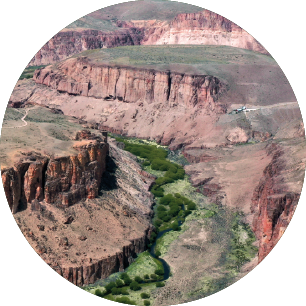
The best time to visit Patagonia Park is during the Southern Hemisphere summer (November to March). Days are longer and warmer, skies are clearer, and the vegetation is at its peak. Spring has its own charm, with delicate flowers and vivid scents, while winter transforms the landscape entirely and offers the unique chance to spot wildlife by following their tracks in the snow.
Patagonia Park is located in northwest Santa Cruz along National Route 40. You can enter through any of the park’s four portals and register at the information center, where you’ll receive information on trails, vehicle routes, and nearby attractions. With the exception of Provincial Route 43 and National Route 40, all park roads are gravel. There are several ways to reach the park depending on your mode of travel – learn more here.
In general, Patagonian summers offer long, mild days and cool nights. Temperatures range between 10-24°C (50-75°F) during the day and drop to around 4°C (39°F) at night. Strong winds and occasional rains can make it feel colder.
It’s best to dress in layers to be ready for changing weather conditions, including a warm jacket, a windbreaker, and sturdy footwear suitable for dry, rocky terrain. Be sure to bring a hat, sunscreen, and sunglasses as well.
Connectivity is extremely limited throughout the region. Most often, there is no phone or data signal on the roads. In some places, such as the information centers, the La Posta de Los Toldos lodge, and Cueva de las Manos archaeological site, WiFi is available.
The nearest supermarket to Patagonia Park is in Perito Moreno, so we recommend stocking up on essentials there before entering the park, especially if you plan to camp.
Inside the park, the La Señalada campground has a country store offering ready-made meals, hot water for mate, drinks and regional products. There is also a café at the Interpretation Center and Planetarium and at the entrance to the Cueva de las Manos Portal.
When visiting Patagonia Park, follow general responsible tourism guidelines to help protect the natural environment and respect wildlife:
Stay on marked trails.
Respect vehicle routes and parking areas, and drive carefully, respecting speed limits.
Make fires only in designated areas.
Do not remove archaeological remains, minerals, or plants.
Keep noise levels to a minimum.
Carry out all waste from trails.
Observe wildlife from a safe distance; never chase or feed it.
Do not enter with pets.
Use electricity responsibly. Facilities in the park run on solar energy.
Explore each portal, check out their main attractions, and discover everything you need to plan your visit by downloading the following brochures.
Come discover one of Argentine Patagonia’s best-kept secrets. Whether you’re traveling solo or with a group, you can plan a one-of-a-kind adventure in the park. Learn how to get here, explore the activities and experiences waiting for you, find out where to stay, and more!